Blog

Transform your content ecosystem into interactive digital activations that drive real engagement and measurable results.

Recent blogs

4 lessons Leaders Week 2025 taught us about the future of fandom

From athlete storytelling to fan-owned content, here are the four key lessons we learnt from Leaders Week London around how sport can build deeper, more meaningful connections with audiences in 2025.

0 minute read
October 9, 2025
News

Last week, the Amondo team joined sports, media, and brand leaders at Leaders Week London. It was a busy few days of sharp ideas, honest debates, and one clear message for everyone in the industry: fandom is shifting.

Fans don’t just follow anymore. They expect to take part. They switch between platforms, creators, and moments that feel real. Athletes are becoming media brands themselves, and data only matters when it helps you connect.

In this post, we dive into four lessons we took away from Leaders Week and share what they mean for how sport can stay relevant in a world where culture moves faster than ever.

1. Your fans are the foundation

Across panels from World Netball to UEFA, one point kept coming up: growth depends on building genuine relationships with your fans. They’re no longer a passive audience. Knowing who they are, what they value, and how they engage is now your biggest competitive advantage because it underpins long-term commercial growth.

That’s why grassroots still matter. It’s where participation starts and lifelong fandom grows. The organisations leading the way stay close to their communities and encourage fans to create and share, and use those insights to guide global storytelling.

This came through especially strongly in conversations around women’s sport, which is reshaping fandom entirely. Research from Wasserman Collective found that 72% of women globally now identify as avid sports fans (up 10% in three years), and women drive 75% of household purchasing decisions.

For rights holders, that creates both an opportunity and a challenge. A growing audience with real spending power is emerging. But, they expect representation and relevance. The stories that resonate are grounded in real fan experiences: women attending matches, sharing their excitement, and showing what belonging looks like. When fans see people like themselves in the stands and on screen, they’re more likely to join in and invest their time, energy, and money.

When fans feel seen, they show up. They participate, spend, and bring new fans with them – growing the sport and its commercial value. Fan-generated content makes this connection tangible. It reminds people why they care, strengthens loyalty, and drives measurable revenue.

At Amondo, we see this every day. When rights holders and brands integrate fan-generated content into their storytelling, even simple CTAs (like linking to merch pages) perform better – with click-through rates far higher than on standard landing pages. That’s because people see themselves in the story, and they trust that investing in the sport is worth it.

2. Athlete storytelling is a growth engine

Our next takeaway from Leaders Week was that athletes are no longer part of the story – they are the story. 

The Women’s Rugby World Cup proved this. Players’ voices and narratives went beyond the matches, creating connection and engagement that no campaign could match. 

Fans connect with honesty and individuality. Seeing content directly from players brings them closer to the team and the sport. It breaks down barriers, showing athletes as people – relatable, driven and human. That relatability builds lasting loyalty. 

And the numbers back it up. Athlete-led social media posts from the tournament generated over 219 million views, amplifying reach far beyond traditional broadcast. 

These figures show that athlete storytelling isn’t a nice-to-have. It’s a growth driver. Rights holders that bring player-led storytelling into their owned channels see real returns – from higher engagement and ticket sales to stronger sponsorship ROI and deeper fan relationships.

Screenshots of the women's rugby world cup

3. Sport is competing for attention

We also learned that sport isn’t just competing with other sports anymore. It’s competing with everything – music, fashion, film, gaming and social media. 

Holding someone’s full attention for 90 minutes is rare. People scroll, stream, and switch constantly. That’s not a threat; it’s an opportunity to rethink how sport shows up.

Panels from Manchester City, FIFA, and Unilever all made the same point: the smartest organisations treat sport as part of culture, not separate from it. They don’t expect fans to come to them. They meet fans where they already are. That means short-form stories, highlights, and behind-the-scenes content that feel natural on the platforms fans use every day.

When sport shows up in the same spaces as fashion and music, it becomes part of the cultural conversation. And when moments are shareable, they live far beyond match day.

At Amondo, we help our partners capture that energy – turning live moments and fan reactions into stories that keep the spotlight burning long after the final whistle.

4. From content to connection

The next big lesson from Leaders Week was that sport can’t rely on reach alone. It’s not just about getting fans to engage – it’s about owning where and how that engagement happens.

Too much of the fan relationship still lives on third-party platforms. Those platforms collect the data, control the interaction, and benefit from the insight that rights holders actually need. The result? They hold the value, while sports lose visibility over their own audiences.

The organisations leading the way are taking that relationship back. They’re building owned ecosystems where they control the fan journey (from discovery to conversion) and can see exactly what drives participation, purchase, and retention.

World Netball’s direct-to-consumer platform, NetballPass, was a standout example discussed at Leaders Week. It connects live content, storytelling and commerce all in one place – giving fans real reasons to subscribe and return. By owning that relationship, World Netball isn’t just generating revenue. It’s collecting insight that fuels better content, smarter partnerships, and sustainable growth.

Social platforms still matter for discovery. YouTube and TikTok are where fans often find the story. But the real value comes when you bring them into your own ecosystem – a space where you can personalise, reward loyalty, and build connection that lasts.

Sport’s next phase of growth isn’t about producing more content. It’s about creating spaces that fans choose to return to. And owning the data that makes those experiences smarter every time.

The future is human

Leaders Week made one thing clear: fandom is evolving fast. Fans don’t just want access. They want to participate, connect, and feel part of the story.

The sports and brands leading that change aren’t chasing numbers. They’re building meaning. They understand that growth comes from depth – from giving fans, athletes, and partners space to contribute, not just consume.

From grassroots to global stages, the opportunity now is to connect every layer of the fan experience. To turn fleeting engagement into long-term loyalty. To make sport feel as alive off the pitch as it does on it.

At Amondo, that’s what drives us. We help rights holders and brands capture the moments, voices, and reactions that matter and turn them into stories that live on their own platforms. Stories that fans see themselves in. Stories that last and drive commercial impact.

Because fandom isn’t about more content. It’s about connection that means something, both for your audience and your business.

How Amondo turned live fan interaction into measurable behavioural intelligence at Capital’s Jingle Bell Ball 2024

At Capital’s Jingle Bell Ball, Amondo supported Global and Barclaycard to turn live fan participation into customer insight by powering a on-stage interactive experience that put fans at the centre of the show.

0 minute read
December 11, 2024
Music

At Capital’s Jingle Bell Ball 2024, Global and Barclaycard set out to do more than create a moment – they wanted to activate fans in a way that made behaviour visible, measurable and actionable.

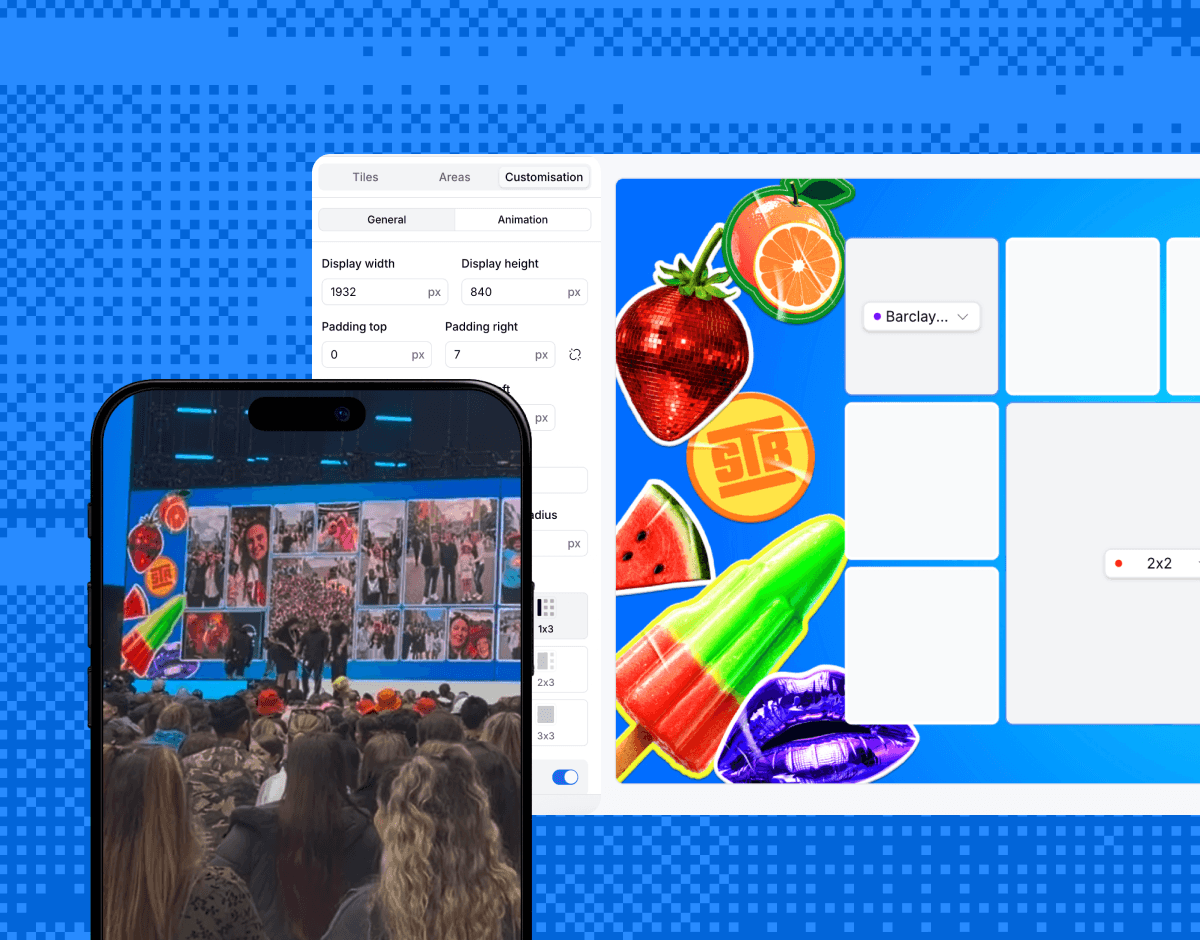
Attendees were invited to interact through live, interactive branded content experiences displayed on the on-stage screens at The O2 in London.


What could have remained a passive social interaction was transformed into a live, in-stadium experience, bringing fan content together and making attendees feel part of the moment by allowing them to see themselves on stage.

At the same time, Barclaycard became a natural part of the fan experience, with branding built into the activity so the focus stayed on fan participation while generating useful first-party data for future marketing.

The partnership was built around three clear pillars: activating audiences through interactive formats, capturing real behaviour, and being able to connect that behaviour to outcomes.

Using Amondo’s content intelligence platform, real-time interaction behaviour was captured at scale — creating clear behavioural signals that showed what resonated with fans.

A long-standing partnership with live music

One of the UK’s biggest live music events, Capital’s Jingle Bell Ball — organised by Global – brings together global artists and thousands of fans around a shared cultural moment.

As headline sponsor since 2020, Barclaycard has played a central role in enhancing the fan experience, from pre-sale ticket access to VIP benefits. 

With a newly extended five-year partnership with Global, Barclaycard sought to go further — moving from presence to participation and from visibility to behavioural insight.

Amondo’s content intelligence platform became central to that shift, enabling Barclaycard to activate fan interaction, capture how audiences actually behaved, and turn those signals into clarity on what worked – not just at Jingle Bell Ball 2024, but for future events to come.

Designing a real-time interaction layer for live audiences

With thousands of fans interacting live from The O2, Global and Barclaycard required a solution that could capture, structure and surface real-time audience behaviour.

Rather than relying on time-consuming manual processes, they needed a fast, dynamic platform that could:

  • Capture audience interaction across multiple entry points
  • Ensure brand-safe, moderated content appears on-screen instantly
  • Integrate Barclaycard branding natively within interaction formats
  • Deliver a high-energy, interactive experience that makes fans active participants and feel part of the experience

Amondo provided a fully integrated interaction layer that transformed distributed fan attention into a live, on-stage experience. 

Fans were invited to submit photos and videos of themselves enjoying the concert, which were then brought on stage in real time, placing the audience at the heart of the show rather than around it.

Turning live audience interaction into measurable behaviour

Amondo’s content intelligence platform pulled fan interactions – such as photos and videos – into one place through QR codes and easy-to-use web forms, to create a measurable, interactive experience:

  • Unifying interaction - Amondo brought fan contributions together by letting attendees upload photos and videos directly using a QR code and a simple web form, making it easy for everyone to take part.
  • Custom-designed on-stage screen solution - A tailor-made digital display experience, featuring a dynamic, visually engaging layout that brought fan content to life.
  • Real-time moderation - A collaborative moderation process between Amondo, Global, and Barclaycard ensured that only high-quality, brand-safe content was featured on the audience engagement surface. 
  • Sponsorship value and brand exposure - Capital, Barclaycard, and Disney branding were woven naturally into the display, reinforcing the sponsorship while keeping fan content front and centre.

A scalable, intelligence-led live deployment

Amondo’s solution was deployed in a phased approach to ensure coordinated execution on the night:

  • Pre-event setup & testing - Amondo worked with Global and Barclaycard to design and test the event engagement interface, ensuring smooth integration of branded assets and a smooth workflow for real-time content moderation.
  • Live aggregation & moderation - As fans shared content on social media and via the Submission Tile, Amondo’s platform automatically pulled that content in, while the moderation team (Amondo, Global, and Barclaycard) made sure only the best content made it onto the screens.
  • In-venue fan engagement via QR code uploads - To maximise participation, fans could submit photos and videos via a QR code, making it easy for those who weren’t posting on social media to take part.
  • Dynamic on-stage content display - Throughout the night, curated fan content was displayed on The O2’s massive stage screens, creating a high-energy, immersive experience that put the audience at the centre of the show while making sure Barclaycard’s sponsorship remained visible in a natural, engaging way.

Delivering real-time behavioural insight at scale

The Amondo Gallery created a highly engaging fan experience while giving Global and Barclaycard clear insight into how fans interacted during the concert.

  • Hundreds of real-time photos and videos from attendees were captured and surfaced on stage, turning audience participation into an integral part of the show.
  • Seamless brand integration ensured Barclaycard’s assets were embedded within the experience without feeling intrusive.
  • An enhanced fan journey created an exciting, interactive moment that fans actively engaged with.
  • Amondo gave Global and Barclaycard first-party behavioural insight into what resonated and what to scale going forward.
  • The experience was a scalable solution that Global and Barclaycard will continue using at future events to enhance live audience participation.

Looking ahead: expanding real-time fan engagement and understanding data

Following the success of Capital’s Jingle Bell Ball 2024, Global and Barclaycard will continue to use Amondo's content intelligence platform across future events to activate live audiences, power sponsorship engagement, and capture first-party behavioural data that goes beyond what third-party platforms and social media expose.

For brands delivering live events, Amondo provides a scalable content intelligence layer that transforms live audience interaction into measurable behavioural insight. 

See how other brands are bringing this to life with Amondo.

Sports brands & rights holders: 5 ways fan interaction powers the non-matchday experience

This article outlines five principles sports brands can use to activate fans between fixtures and capture real behavioural signals beyond matchday.

0 minute read
November 16, 2022
Sport

One of the biggest challenges for sports brands is the time between matchdays. Attention lapses, momentum declines, and performance becomes harder to uphold.

But non-matchdays aren’t a gap, they’re a unique opportunity.

When activated well, this period allows rights holders to drive meaningful fan actions such as signing up for memberships, purchasing merchandise, downloading apps, or planning future match attendance. 

These moments reveal how fans actually behave, not just what they view or like.

By designing interactions around non-matchday moments — from membership sign-ups to buying merch — sports brands can uncover real signals of intent and preference, rather than relying on surface-level metrics.

So how do sports brands activate audiences between matchdays and turn behaviour into desirable intelligence?

We’ve identified five principles sports marketers should apply when designing content campaigns outside of matchdays to gain more insight into their fan base and drive commercial impact. 

‍Tip 1: Design video to capture fan behaviour, not just fill inventory 

Between matchdays, video is one of the most effective ways to keep fans engaged.

According to HubSpot’s 2024 video marketing data, short-form video is the most used format and delivers the highest ROI among marketers, with 83% reporting its effectiveness.  

Short, bite-sized videos – such as fan-generated content, match clips, analysis, or behind-the-scenes footage – help extend the match narrative, fit naturally into modern attention spans and maintain momentum when there’s no live action.

Unlike static content, video demands time and attention. How long fans watch, what they skip, or whether they explore further are strong signals of interest that are far more meaningful than a like or impression.

The challenge is that this behaviour often lives on third-party platforms. This means that when a video is shared only on social media, most engagement insight remains inaccessible.

Putting video on your own website or app makes all the difference. 

It lets you see how fans actually interact with content, so you can track and measure deep engagement, learning what drives fans to act, not just what they watched.

Takeaways

  • Video keeps fans engaged between matchdays and creates clearer signals of interest than static content
  • The real value of video lies in how fans engage with it, from what they watch, finish, and act on — not just who created it
  • Hosting video on owned channels and websites helps brands see what drives actions like ticket sales, merch, and sign-ups

Tip 2: Encourage fans to contribute to unlock better insight

Wyng (formerly Offerpop) found that while more than half of consumers are willing to interact with brand campaigns, only 16% of brands successfully turn that participation into first-party behavioural insight they can act on.

The opportunity isn’t just to spark interaction, but to invite fans to actively contribute beyond matchday.

Sports rightsholders have some of the most loyal fan bases, and they want to stay involved between fixtures, sharing opinions, creativity and personal moments that reflect their connection to the club or brand.

By inviting fans to submit content, opinions or experiences, rightsholders move beyond surface engagement. 

Every submission becomes a source of first-party data, revealing who fans are, what motivates them, which players or themes resonate most, and how different audiences behave outside of matchday peaks.

The result is non-matchday campaigns that feel more genuine and community-led because they feature real fan voices. 

At the same time, rightsholders gain a clear view of how audience behaviour and what drives them, helping to shape content and partner value without increasing output.

For their “Run Your Way” campaign, New Balance used Amondo’s social gallery and Submission Tile to give runners a simple way to take part. 

Participants shared photos and videos of their runs via race hashtags or by uploading content, which surfaced in a branded wall on the event site. 

This allowed New Balance to see which moments people chose to share and how community content performed compared to brand content, all based on real behavioural data, not surface metrics.

Takeaways

  • Fan participation drives intelligence, not just engagement
  • Brands can create more value without creating more content
  • This approach helps you to prioritise content decisions and partner activations based on behaviour, not guesswork

Tip 3: Create controlled content variation to generate behavioural insight

FC Nordsjælland used a deliberately different content perspective to observe how fans responded to a new format, topic and style compared to what they were used to for official club media. 

In 2018, the club handed a GoPro camera to their intern, a 14-year-old fan. He interviewed players, including asking the club’s star striker why he wasn’t scoring goals…

By introducing a fan-led viewpoint inside controlled, branded formats, the club was able to compare behavioural responses – such as completion rates, replay behaviour and interaction patterns – against more traditional training and behind-the-scenes content. 

This contrast helped reveal which types of storytelling drove deeper engagement from fans and sustained attention outside matchdays.

The value wasn’t the identity of the person holding the camera. It was the behavioural variation the format introduced, and the insight it generated into what non-matchday content actually resonates and holds attention.‍

Takeaways

  • Fan submissions add authenticity and community value, but the real advantage comes from experimenting with formats and observing behaviour to see what actually works
  • Varying content formats and access help rightsholders identify what drives non-matchday performance

Tip 4: Turn repeat fan behaviour into compounding intelligence

Non-matchdays aren’t only valuable because they create more content – they’re valuable because they create repeatable behavioural signals.

Using the same interactive formats over time encourages fans to return, making it easier to see clear patterns in behaviour; from content structures that drive deeper engagement andwhich access points prompt repeat interaction to which signals connect to downstream outcomes.

Over time, this behavioural data compounds. 

Each activation adds context to the last, allowing brands to move from isolated performance snapshots to a clear understanding of what consistently works – and what to stop doing by proven behavioural drivers.

Takeaways

  • Repeatable activation creates behavioural data that compounds over time
  • Comparing signals across non-matchdays reveals what to scale, adapt or stop
  • Intelligence grows by reapplying learning, not recycling content

Tip 5: Activate audience content through measurable interaction formats

During the Tokyo 2020 Olympics and the coronavirus pandemic, Team GB faced a clear challenge: fan support was remote, fragmented and largely invisible beyond surface engagement metrics.

Using Amondo, Team GB brought together fan-generated content, athlete stories and branded partner content into a series of Amondo Galleries designed for engagement, participation and activation.

Amondo’s Submission Tile invited fans and athletes to share photos and videos with messages of support, creating a continuous stream of authentic content throughout the Games. 

At the same time, embedded Click-Through Tiles turned attention into action, converting passive viewing into measurable interaction.

App and newsletter sign-up CTAs were placed at moments of high emotional connection, enabling Team GB to grow its owned audience and capture first-party behavioural data. This gave the team a clearer understanding of who its fans were, how they engaged with Olympic content, and how to continue those relationships beyond the Games.

The result wasn’t just visibility – it was behavioural intelligence. A repeatable model for understanding and activating fan support when attention is distributed, and physical presence isn’t possible.

Takeaways

  • Participation becomes intelligence
  • Interactive formats convert attention into measurable action, capturing behaviour that social platforms don’t expose
  • Behavioural insight enables long-term value, helping brands grow owned audiences and deepen engagement  – even when physical presence isn’t possible

In summary

Non-matchdays are valuable because they allow sports brands to both publish more content and also create a repeatable opportunity to capture fan behaviour.

When fans interact with content through structured, portable formats, sports brands and rightsholders gain first-party behavioural insight into what holds attention, signals intent and drives outcomes between matchdays. 

That insight compounds over time, replacing guesswork with clarity on what to prioritise, scale or retire.

The advantage isn’t fan-created content or curated feeds. It’s the ability to observe real behaviour, compare performance across formats and apply learning consistently as the season unfolds.

You can explore more examples in our case studies here.

Seven behaviour shifts redefining sports marketing in 2023 and beyond

This post explores seven key shifts reshaping sports marketing, showing how clubs that capture first-party interaction data and understand their fans can make smarter decisions about content, sponsorship and growth.

0 minute read
September 22, 2022
Sport

Sports institutions worldwide operate in an environment where attention is scattered, platforms hide meaningful data, and fan behaviour is harder to interpret than ever.

And while the pandemic added a greater sense of community to fan groups by accelerating digital participation, it also exposed a deeper problem: more content and more channels did not create more clarity. Engagement increased, yet insight into what actually drives fan action remained limited.

The brands that lead are those that can capture first-party interaction data, connect audience behaviour to commercial outcomes, turning these signals into intelligence they can act on.

Amondo has collected seven key behaviour shifts reshaping sports marketing in 2023 and beyond for you to stay on the pulse.

Enhanced matchday engagement

When gameday arrives, fans worldwide have only one thing on their mind, and that’s their team.

Thanks to social media, the matchday experience has evolved in recent years, with teams turning to press conferences, line-up announcements, and pre-match content to prolong fan engagement. 

The beauty of this content is that fans also engage with it outside of the matchday. In fact, The Nielsen Sports Report found that sports viewership has become a multi-screen experience, with 47% of sports watchers simultaneously interacting with other live content, a 5% increase in 2020.

This becomes a barometer for engagement and reach worldwide, as well as a reliable indicator of attention and interaction at scale. Beyond strengthening the connection between clubs and fans, these moments generate repeat interaction patterns that signal sustained interest and inform which formats should be prioritised and scaled for future fixtures.

This interaction data can then be used to recognise which content resonates best in the run-up to matchday, helping teams plan pre-match activations that build momentum and drive repeat fan engagement once matchday comes around.

More connected non-matchday experiences

For every matchday, there are significantly more non-matchdays – and these are the moments where fan attention is most at risk of drifting.

Between fixtures, fans still interact with teams, but attention is fragmented, and expectations are harder to gauge. 

While the Nielsen Sports Report estimates that 39% of global fans watch non-live content related to a live sports event, simply increasing the volume of non-matchday content does not explain what actually sustains interest.

Non-matchdays are valuable not because they allow brands to publish more content, but because they create opportunities to observe fan behaviour when live sport isn’t the primary driver.

By activating structured interaction formats, sports brands can capture repeat behaviour and intent signals which reveal what genuinely holds attention between games. 

For example, Liverpool FC used Amondo to power an FA Cup Hub that centralised tournament content in a single, owned experience. 

Click-Through Tiles connected fan engagement to retail, membership and competition entry, turning FA Cup interest into measurable conversion and first-party fan insight — all within an environment Liverpool could fully measure and optimise.

This behavioural insight provides clarity on which formats to prioritise, scale or stop – turning non-matchdays into learning moments that strengthen performance when matchday returns. This gives the team richer first-party fan data they can use to personalise ongoing experiences and re-engage audiences between fixtures, turning passive content consumption into measurable actions like ticket sales, merchandise purchases and deeper fan relationships.

More screens = more opportunity 

Diego Pinzón, Director of Digital Media and Content at Atlanta United FC, predicts that second-screen content will increasingly compete with the live match itself – with fans taking the driving seat in creating and amplifying that experience.

This shift reflects the rise of the “third space”: shared digital environments where fans connect in real time, regardless of physical location. 

It means a supporter in Australia can react, debate, and create alongside fans in Europe while the match unfolds.

The scale of these spaces is already notable. The NBA’s Discord server alone has more than 147,000 members, highlighting how matchday attention now lives far beyond the stadium and broadcast feed.

NBA Chat Discord server

Live blogs and online chat functions have turned fandom into a deeply social experience, with instant reaction podcasts and live broadcasts becoming increasingly popular - and every interaction into a signal of intent, emotion and interest.

If clubs themselves can harness the power of “dual-screen” entertainment sooner rather than later, fans will become deeply grateful and more engaged than ever, but it also lends itself as an opportunity to gain visibility into real fan behaviour and understand what really resonates, creating a clearer line between content participation and outcomes. 

The advantage belongs to the teams that know what fans do, not just where they watch.

No restricted areas

Amazon’s All or Nothing series has provided unprecedented access to elite sporting organisations, documenting full campaigns for clubs such as Arsenal, Manchester City, and Juventus, alongside the New Zealand All Blacks and NFL franchises, including the Arizona Cardinals and Los Angeles Rams.

All or Nothing Series poster

These documentaries were among the first modern sports media to open up the inner reality of elite sport, revealing everything from dressing room confrontations to boardroom decision-making. In doing so, they’ve fundamentally changed how fans perceive teams.

Netflix has set a precedent with productions like Formula 1: Drive to Survive and Sunderland ’Til I Die, proving the appetite for long-form, access-driven sports content at scale.

There are measurable benefits for the institutions involved: allowing teams to control how access is framed, extend their story far beyond matchday, and generate a deep library of high-impact content consisting of clips, moments and narratives that fuel ongoing engagement across digital channels.‍

But the real value goes beyond exposure. 

This content creates sustained fan attention, repeat interaction and behavioural signals that traditional broadcast coverage never captures. It turns a season into a living content ecosystem rather than a fixed media product.

It’s no surprise that major sports organisations now see documentary access as a strategic asset, not a marketing gamble. 

As competition for attention intensifies, expect more teams to invest in formats that don’t just tell their story, but keep fans actively engaged with it long after the final whistle.

Crypto, NFTs and The Metaverse

The most expensive NFT in the world is a digital statue of LeBron James, which sold for a whopping $21.6m, signalling early demand for digital sports assets.

LeBron James NFT

Bitcoin.com reported that Real Madrid and Barcelona jointly filed a trademark application related to cryptocurrency wallet services.

This move highlights how fans are increasingly comfortable engaging with teams through owned, interactive web-based formats such as branded collectables to tokenised access, rather than just static merchandise.‍

Market Decipher research points to sustained long-term growth in NFT-based sports collectables from 2022 to 2032, alongside a broader expansion of the sports trading cards market, which is forecast to grow from around $12.9bn in 2021 to over $49bn by 2032.

Chart of sports NFT market size in 2021 and 2022

And the same evolution is already happening in ticketing. 

Deloitte’s 2022 sports industry outlook highlighted how individual and season tickets are transforming from simple access passes into dynamic digital products capable of unlocking content, experiences and ongoing engagement across a season.

For sports organisations, the opportunity isn’t just to launch new digital formats, but to understand what those formats actually do. 

When digital products are treated as intelligence layers rather than one-off experiments, teams gain clarity on what resonates, what converts and what’s worth prioritising next.

The rise of ethical sponsorships?

Sponsorships are essential revenue streams and marketing strategies for sports clubs. The Premier League’s “big six” alone generated $1.2bn in sponsorship deals in the 2021/22 season (the other fourteen teams’ sponsorships were worth a combined $300m), for a total sponsorship revenue of over $1.5bn.

All good? Not quite.

Betting remains a controversial industry for sports institutions, with ongoing questions around ethics and gambling addiction.

In 2021/22, nine of the 20 Premier League teams’ main shirt sponsors were in the gambling industry.

According to The Times newspaper, Premier League clubs are set to agree to a voluntary ban on “front-of-shirt” betting sponsorships in the future; in 2021/22, nine of the 20 Premier League teams’ main shirt sponsors were in the gambling industry. 

A further nine Premier League clubs had sleeve sponsors from the betting or gambling industry in 2021.

Football club front of shirt sponsors

This is a trend that the sporting world is already trying to set straight. In the US, the NFL has limits on the number of TV spots it will sell to sports betting companies, and the NBA isn’t allowing sportsbooks to advertise on its teams’ jerseys.

If sports institutions are beginning to take stronger stances on who and what they are willing to be sponsored by, it will be interesting to watch the rise of “ethical” sponsorships in the coming years.

Branching out: Esports and women’s sport

The Nielsen Group found that more than 2,250 esports sponsorship deals were announced globally in 2021, up from 1,785 in 2020

During the same timeframe, the female esports fan base grew by 19%, highlighting how audience growth and commercial interest are accelerating in parallel.

Meanwhile, women’s sport more broadly is gaining significant traction. The Drum reported that in 2022, more than 15 million viewers watched women’s sport in the UK between January and March — nearly three times the audience recorded in 2021. 

At the same time, EA Sports’ FIFA 23 introduced women’s club teams, signalling a shift in how women’s sport is represented and monetised.

No alt text provided for this image

TJ Adeshola, Head of U.S. Sports at Twitter, noted that the growth of women’s sports communities is already driving disproportionate impact across the industry, prompting organisations such as the NCAA to launch gender-specific social channels and rethink how they engage audiences.

The takeaway for brands and rights holders is clear: engagement patterns are evolving, and sponsorship value is being created outside traditional benchmarks.

To capitalise on this shift, organisations need visibility into real fan behaviour, understanding which content drives interaction, what influences outcomes, and where investment should be amplified based on evidence, not assumption.

Conclusion

These trends underscore a fundamental change in how sport connects with its audiences. 

As fan engagement stretches beyond game day and across platforms, from blockbuster television to sophisticated financial products, success can no longer be measured by volume or reach alone.

Whilst fans rely on their favourite sporting institutions to deliver a consistent yet varied flow of engaging online and offline content, to be enjoyed on any device, at any time, and any place they choose, it depends on understanding real behaviour, knowing what resonates, and using that intelligence to make smarter decisions about what to amplify and where to invest.

See how other brands are bringing this to life with Amondo.

Five football marketing campaigns that redefined fan engagement

This post highlights standout football marketing campaigns, showing how clubs and leagues have used participation-led, purpose-driven ideas to keep fans engaged while creating deeper emotional connection and clearer signals of what truly resonates.

0 minute read
September 1, 2022
Sport

The past few years have been transformational for the world of sport, with football marketing campaigns having to evolve rapidly in response to unexpected difficulties. 

The COVID-19 pandemic especially challenged football clubs to find new ways to engage fans during lockdowns across Europe, accelerating innovation in football marketing and digital engagement.

As one of the most affected industries, clubs were forced to find new ways to maintain fan connection while upholding their existing branding commitments.

From melting trophies and redesigned kits to video game competitions, we’ll be highlighting some of the best football advertising campaigns since 2020, which have reshaped fan-first storytelling. 

1. Ajax Amsterdam: A Piece of Ajax, a standout football marketing campaign

While COVID unfolded, the Netherlands’ Eredivisie 2019-20 season was cancelled before all the fixtures had been played. 

Dutch football made its return for the 2020-21 season, but fans were still barred from entering football stadiums.

So when AFC Ajax claimed their 35th championship, they did it without fans for 30 of their 34 matches.

In the absence of stadium attendance and in-person support, Ajax shifted focus from physical presence to participation, creating a moment designed to draw out intentional fan action rather than passive celebration.

Not content with steamrolling the competition (they won the title by a massive 12 points), Ajax launched the Piece of Ajax campaign and melted down their championship trophy into over 42,390 individual stars – one for each of the club’s season ticket holders – as a thank you for their support while matches were played behind closed doors.

Edwin van der Sar, CEO at Ajax, said: “This season, we have largely had to play without our fans. Without them sitting in the stands, at least. Despite this, we have felt their support every week. On the way to the stadium, on social media, and in our personal contacts.

No alt text provided for this image

"Previously, when we said 'this title is for you,' we were expressing how we were doing it for the fans. However, sharing the trophy is the ultimate proof that we really are. After a turbulent year, we are ensuring our fans feel part of our championship."

By promoting this message across social platforms, during travel, and through direct contact with fans, AFC Ajex highlighted how fan engagement increasingly manifests across multiple environments, even when traditional attendance disappears.

Ajax’s commitment to sharing their successes with fans was admirable, and it won them many plaudits for their creative and heartfelt initiative.

Widely regarded as one of the best football marketing campaigns of the pandemic era, Piece of Ajax demonstrated how participation-led football marketing can deepen emotional loyalty.

But beyond the emotional impact, the campaign illustrates a broader shift in fan expectations, from recognition to participation. 

Supporters now seek meaningful involvement in a club’s success, not just acknowledgement of it. 

2. Leyton Orient: UltimateQuaranTeam! – one of the best football marketing campaigns of the pandemic era

When football fixtures in England were postponed indefinitely at the start of the pandemic, Leyton Orient Football Club's off-the-cuff campaign turned into a 126-team knockout FIFA tournament that would include teams from sixteen countries - including England, the USA, and the Netherlands.

With live football not an option, the initiative shifted fan engagement from scheduled consumption to active participation, inviting supporters to co-create the experience rather than simply follow it.

At a time when the world faced uncertainty, Leyton Orient’s campaign created a shared participation loop that kept fans interacting with clubs, players, and each other at a time when traditional touchpoints had disappeared and ultimately gave them something to smile about.

#UltimateQuaranTeam started as a “let’s do something while there’s no football being played” game, but it soon picked up momentum with teams like Manchester City, Roma, Orlando Pirates, Sydney FC, Istanbul Basaksehir and Groningen nominating one individual to represent them on the FIFA 20 video game, including professional footballer Andros Townsend (Crystal Palace).

The result? £66,122 was raised for the English Football League’s mental health charity Mind, and the official Covid Response Team, and a lot of FIFA games were played during lockdown!

Beyond fundraising, the tournament revealed how cause-driven participation can deepen engagement, which combines play, purpose, and community into a single experience.

Danny Macklin, Chief Executive at Leyton Orient, said: “This is very much the brainchild of our innovative Media Team. This provides a fantastic opportunity to play a small part in providing some engaging content to football fans at this very difficult time. 

“Furthermore, and perhaps even more importantly, it’s a chance to raise much-needed funds for EFL clubs and two phenomenal causes."

The campaign has since been cited as a benchmark for digital-first football campaigns, blending community, entertainment, and purpose-driven football marketing.

‍For clubs, initiatives like this show that when interaction is designed with intent, even improvised formats can become powerful sources of behavioural insight.

3. Arsenal FC: No More Red – one of the most powerful football marketing campaigns in recent years

London is one of the world’s most powerful footballing cities. 

Clubs like Chelsea, Fulham, and West Ham United call it home, but the red and white of Arsenal F.C is most closely associated with London’s football history.

Outside the world of football, London faces ongoing problems with youth crime and gang culture. In 2021, London saw the highest ever level of teenage murders since records began, most of which involved knife attacks.

Arsenal’s response was strong, and the club’s No More Red campaign (in partnership with Adidas) manifested itself on the pitch. 

Arsenal removed any hint of red from their traditional strip, playing in an all-white kit in an FA Cup match against Nottingham Forest to raise awareness of the amount of young blood being spilt on the streets of London.

The campaign included interviews with current and former players, actor Idris Elba, and grassroots initiatives that tackled the root causes of youth violence.

Together, these elements extended engagement beyond the match itself, encouraging deeper interaction with the campaign’s message across multiple channels.

Arsenal went one step further; the all-white shirts were not made commercially available and were instead reserved for people making significant contributions to local communities.

No alt text provided for this image

Source: arsenal.com

Idris Elba, No More Red mentor, said: “From the time young people leave school, until the time they’re at home with family, there is often a void, a dangerous spike of nothing to do, where nothing can easily turn into something dangerous."

“If there continue to be no options for this after-school period, we will always see gangs form. Let’s create options for these young people.”

Voices like these added emotional weight to the football advertising campaign, strengthening participation and reinforcing how storytelling influences fan perception and response.

Arsenal’s campaign raised a lot of awareness for youth violence in London, and the club’s decision to emphasise the problem through a specially-made kit was particularly effective, and reflects how fans increasingly connect through shared values, not just results.

4. Manchester United: Donate Your Words – a landmark football advertising campaign

While Arsenal was tackling youth violence in London, its rivals, Manchester United, were focusing on the older generation.

The ‘Donate Your Words’ campaign, launched with chocolatiers Cadbury’s, found that 225,000 older people go more than a week without speaking to anyone. It raised awareness for older supporters who don’t have anyone to share their words with.

The campaign reframed fan participation as an act of empathy, which encouraged purposeful and real-world interaction.

Featuring club captain Harry Maguire and reaching 92.8% of the UK’s population, Manchester United pushed awareness for the older generations, including matchday advertising, digital media, and matchday access, to create a unique ‘Guest of Honour’ experience for 11 local elderly Manchester United fans.

“Any small gesture and interaction can play a part in helping to tackle loneliness amongst our older generation.”

Sean Jefferson, Director of Partnerships at Manchester United, said: “We are pleased to start our partnership with Cadbury by supporting their ‘Donate your words’ campaign. 

“The club is encouraging all fans to give a few moments of their time to speak to older people around them who might welcome a thoughtful conversation.”

Like Arsenal, Manchester United brought their campaign to the pitch. A strong move that gave the Donate Your Words initiative an added sense of authenticity, creating meaningful interaction that extends beyond awareness into action.

5. LaLiga: The Red Carpet(s) – one of the best football marketing campaigns in european football

It isn’t just football clubs that are redefining fan engagement – entire leagues are too.

In 2021, LaLiga – Spain’s top footballing division – rolled out seven red carpets worldwide (literally) to activate global audiences around its showcase fixture, El Clásico.

By bringing El Clásico into public spaces, LaLiga transformed a broadcast fixture into a physical, shareable experience, creating visible signals of global fan engagement beyond traditional viewership metrics.

No alt text provided for this image


Source: sportingnews.com

Real Madrid vs Barcelona is one of the world’s most intense footballing rivalries, where the winners of El Clásico are often the team that goes on to win the league.

And it isn’t just a Spanish audience that is invested in the outcome, which is why LaLiga launched a campaign that brought El Clásico to nations including the US, Australia, and most famously, Tajikistan.

LaLiga won the “Best Marketing/Advertisement campaign” at the Marspo Awards in 2021 for rolling out the red carpet in Tajikistan's capital city, Dushanbe, to demonstrate the city’s love of football.

No alt text provided for this image

Source: laliga.com

Jose Carlos Loaiza, LaLiga Delegate for Russia & Baltic countries, said: "We are very happy with this recognition. From London to Dakar, the installation of the LaLiga ‘Red Carpets’ across the globe brought to life the excitement, the entertainment, the glamour, and the global reach of this fixture and LaLiga. “We are pleased to see we played a part in inspiring people across Central Asia, through the power of sport and entertainment.

"Too often, major sporting fixtures are seen through the prism of a “local” audience. LaLiga put that myth to bed with this campaign and was well-rewarded for demonstrating that even smaller nations enjoy football as much as local fans. And the campaign illustrates how major fixtures can generate value by activating fans where they are, revealing that global engagement is shaped as much by cultural participation as by broadcast reach.

A few final thoughts


Sports institutions can’t survive without fans, but meaningful engagement is no longer defined by presence or sentiment alone. The campaigns explored here show how clubs and leagues are creating moments that invite participation, interaction, and emotional investment, strengthening the relationship between fan and institution while generating measurable signals of engagement.

No alt text provided for this image

Photo by Ekansh Saxena on Unsplash

Looking more closely, each campaign may have originated in sport, but its impact extended far beyond the pitch. Whether addressing social issues or creating unity during periods of disruption, these initiatives succeeded by encouraging fans to actively take part. In doing so, they demonstrate how purpose-driven campaigns can deliver both cultural value and clearer insight into what truly resonates with audiences.

See how other brands are bringing this to life with Amondo.

Getty Images and Amondo partner to transform licensed visual content into actionable fan insight

This post announces Amondo’s partnership with Getty Images, showing how licensed visual content is activated to capture first-party fan behaviour and performance insight.

0 minute read
February 23, 2022
News

Content intelligence platform Amondo has partnered with Getty Images to give sports, media, and entertainment organisations a new way to display and activate licensed visual content. These experiences capture first-party fan behaviour and performance insight that other platforms don’t provide.

Getty Images is a preeminent global visual content creator and marketplace that offers a comprehensive range of content solutions to meet the needs of customers worldwide, regardless of their size. 

Through its Getty Images, iStock, and Unsplash brands, websites, and APIs, Getty Images provides premium, licensed visual content that powers storytelling at a global scale. This content can now be discovered and activated inside Amondo’s platform.

Working with clients including Chelsea FC, Universal Music, Formula E, the International Cricket Council, and Live Nation, Amondo ingests brand, creator, and fan content and transforms it into portable branded formats across web, mobile, partner sites, in-venue screens, and OOH.

These formats capture first-party behaviours such as taps, swipes, depth, hesitation, dwell and QR journeys. 

This behaviour connects to downstream commercial outcomes like traffic, sign-ups, purchases, ticket sales or conversions - creating an intelligence layer that reveals what content actually drives performance and why. 

This means visual content is no longer just displayed; it becomes measurable, comparable, and optimisable based on how fans actually interact with it.

The integration allows organisations to connect their Getty Images account within the Amondo dashboard to add visual content from Getty Images to their Amondo Galleries. 

"We’re delighted to announce our partnership and integration with Getty Images, enabling Getty’s visual content to be activated directly within Amondo. Many of our clients already use Getty Images, and this integration allows that content to be deployed in Amondo’s portable branded formats while capturing first-party behavioural insight into how audiences actually engage. The result is clearer intelligence on what resonates, how content performs, and what to scale next, moving clients from distribution to understanding what works and why.”

Charlie Bucker, Founder, Amondo

"Enabling our clients to work smarter and faster to showcase visual content that engages audiences across the globe is at the heart of our strategy. This is especially important during event-driven coverage, where Getty Images is relied upon as a core component of fan interaction. Our exciting partnership with Amondo streamlines the creation process through a native experience with content at customers' fingertips.”

Benjamin Beavan, Global Director Strategic Development, Getty Images

One of the first organisations to make use of the new integration is the British Olympic Association and Team GB around the recent 2022 Winter Olympics in Beijing. 

Team GB was able to access and display licensed visual content from Getty Images within daily Imprints showcased via the teamgb.com, official Team GB app and social media.

"The Getty Images integration with Amondo has allowed us to feature the high-quality and impactful photos that Getty Images is renowned for within our Amondo Gallery feeds — and in a fraction of the time it would take to do manually. We’re proud to have worked with Amondo in bringing the passionate support of Team GB fans into one central location, making it easy for athletes and supporters alike to feel the momentum behind the team from back home.”

Nicol McClelland, Head Of Marketing, British Olympic Association

Get started with Amondo by booking a demo with the team.

Thank you! Your submission has been received!
Oops! Something went wrong while submitting the form.

Ready to build something your audience will remember?

Let’s make it happen. See Amondo in action and discover how you can launch interactive digital experiences that drive real results.

Trusted by leading global brands

Wall of Love

“More and more we’re seeing the synergy between Outdoor and Social. It’s great to see content being amplified in locations to a target audience in the right moments.”

Yolanda Joseph-Helmy
Head of Outdoor, Global
Explore

“We use Amondo every race week to easily source, curate and showcase content across our digital platforms. The fans love it - and we do too."

Emily Hirth
Digital Products, Formula E
50%
Increase in page views
8.6%
CTR on partner CTAs
Explore

6.3%
CTR ticket sale CTAs
1 million
Content impressions
Explore

‍"Working with Amondo helped us to bridge the gap between fans and athletes and to inspire the nation to get behind the team, cheer and show their support."

Claudia Mestre-Moreno
Marketing Executive, British Olympic Association
89%
Interaction rate
+1,500
Pieces of fan-submitted content
Explore