Tags
Sport
Published
Ready to activate your content? Talk to our team.
From euphoric last-minute goals to season-defining errors, live sport creates intense emotional moments for fans.
Yet most in-venue activations still optimise for visibility, rather than interaction, exposing brands to high-intent audiences without capturing how live sports fans actually behave.
As a result, teams and rightsholders collect little first-party behavioural data. They don't see how fans interact or which moments convert live attention into measurable outcomes.
The Anonymous Fan Index shows that the average sports brand can identify only about 24% of its fans, leaving the majority of in-venue engagement unmeasured and unconnected to ongoing value.
For sponsors and rightsholders, this makes sustained ROI almost impossible to prove.
Once fans leave the venue, the behavioural signal is lost, along with the opportunity to turn live sport into a year-round digital connection, intelligence and commercial impact.
Why this problem matters now
Sponsors are under increasing pressure to justify investment with measurable, outcome-driven results, rather than exposure alone.
As budgets tighten, traditional sponsorship metrics such as impressions, reach, and footfall no longer provide the clarity needed to prove sustained sports sponsorship ROI.
However, first-party behavioural data is becoming significantly more valuable. As third-party cookies decline, brands need direct insight into how fans actually interact with content to personalise experiences, retarget intelligently and build long-term growth strategies.
For sports teams and rightsholders, this creates a structural challenge. Engagement still peaks around match days and major moments, but without capturing real behavioural data, those interactions remain disconnected from year-round fan relationships.
To move beyond event-led visibility, sports brands must activate content in ways that capture how fans behave, including what they explore, engage with and return to, and connect that behaviour to outcomes.
Only then can sponsorship performance be measured by real engagement, ongoing value, and long-term fan growth, rather than surface-level exposure and other redundant metrics.
Formula E's experience
Unlike legacy motorsport categories such as Formula 1, where fandom is deeply established, Formula E is actively building its audience in real time across major cities, cultures and digital behaviours. That makes understanding fans, rather than solely reaching them, a critical priority.
The championship delivers live E-Prix events in cities around the world, each creating moments of high attention and emotional engagement. But because fandom is not yet a given, Formula E must work harder to capture insight into who its fans are and what drives them to take action, both during and beyond race weekends.
Formula E needs to deliver a consistent, high-quality fan experience across multiple locations, markets and venues, without losing the ability to measure behaviour or compare performance from one E-Prix to the next.
At the same time, Formula E has a growing portfolio of global sponsors, including Allianz. These partners require activations that work at scale and deliver measurable outcomes, and not just on-site excitement.
Sponsors need clarity on how fans interact with content, which moments capture attention, and what drives meaningful actions, long after the race ends.
To turn engagement into long-term insight, sponsor value and sustained commercial impact, Formula E needed a repeatable, global way to capture first-party data and consent across its fanbase — and an owned activation layer that could consistently collect behavioural insight at every event.
Without this, much of the value created at each E-Prix remained outside Formula E's control, limiting insight and long-term commercial impact.
How Formula E approached the challenge
Formula E partnered with Amondo to power in-venue fan engagement technology across the Allianz E-Village at every E-Prix to turn live race-day moments into tangible, first-party fan interaction.
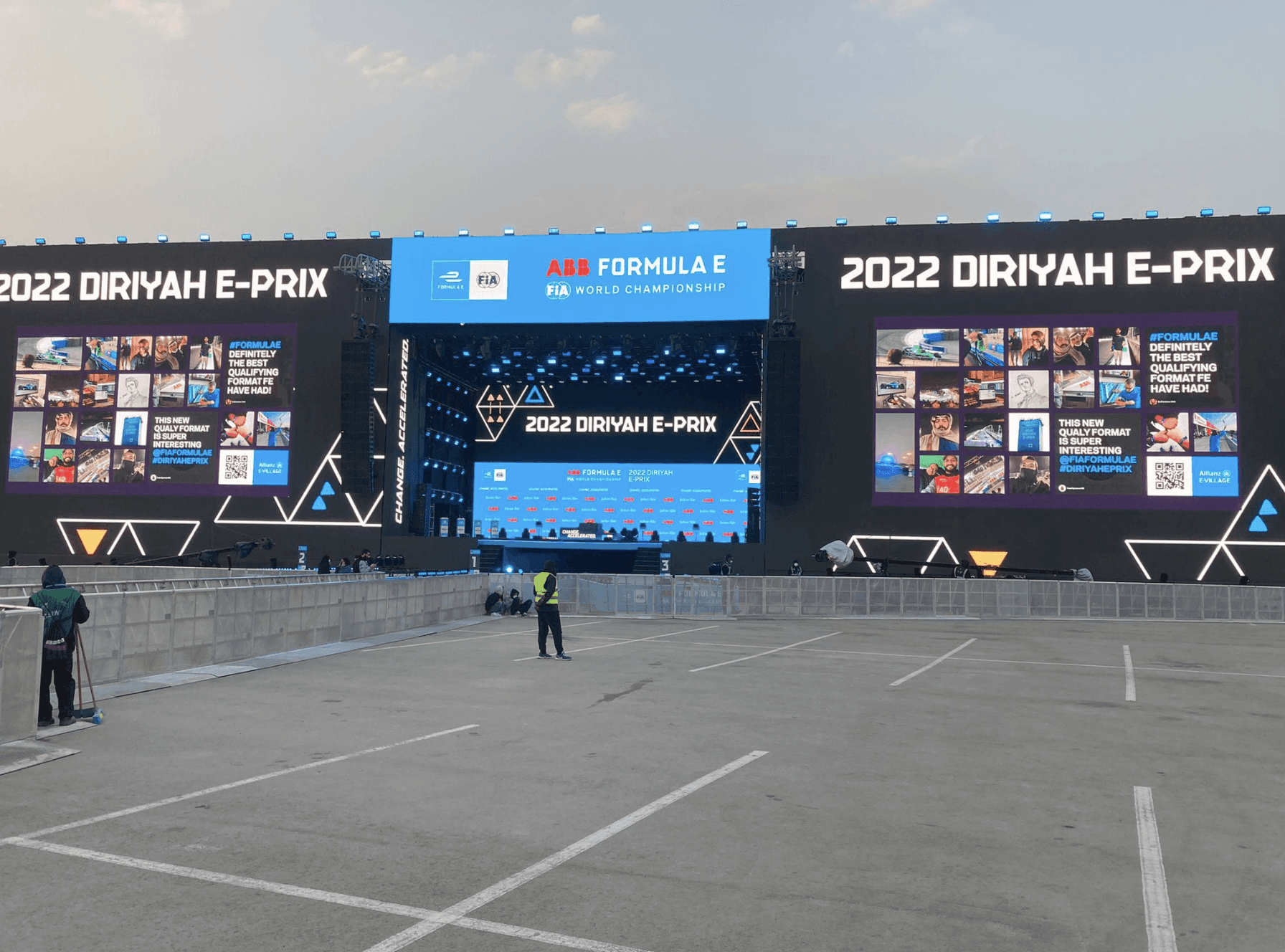
Using Amondo's portable Gallery formats and Submission Tiles, Formula E created simple, repeatable experiences that allowed racegoers to submit photos and videos via QR codes displayed throughout the venue.
Fans could participate instantly, on-site, without leaving the experience or relying on third-party social platforms.
This allowed Formula E to capture fan-generated content, first-party data and consent at the exact moment of engagement. This transformed live attention into an owned behavioural signal rather than a fleeting interaction.
Formula E then used Amondo to activate that content in real time, displaying fan submissions across Allianz-branded screens throughout the E-Village.
This created a shared, live experience that encouraged further participation, repeat interaction and deeper engagement as the event unfolded.
These experiences were co-branded with key partners, including Allianz and ABB Group. Rather than functioning as passive logo placements, sponsors were embedded directly into the fan journey, gaining meaningful visibility within an interactive experience that captured real behaviour and delivered long-term value beyond race day.
Turning engagement into commercial outcomes
Rightsholders often mistake surface-level engagement, such as likes, shares and impressions, for high-value sponsorship performance. In reality, attention alone doesn't translate into ROI.
For an activation to deliver commercial value, it must connect content to behaviour and behaviour to outcomes.
Formula E addressed this by extending live fan participation beyond the venue and into owned digital environments.
Fan galleries were activated on the Formula E website using Click-Through Tiles that directed fans to high-intent actions such as app downloads, voting experiences and direct-to-consumer pages.
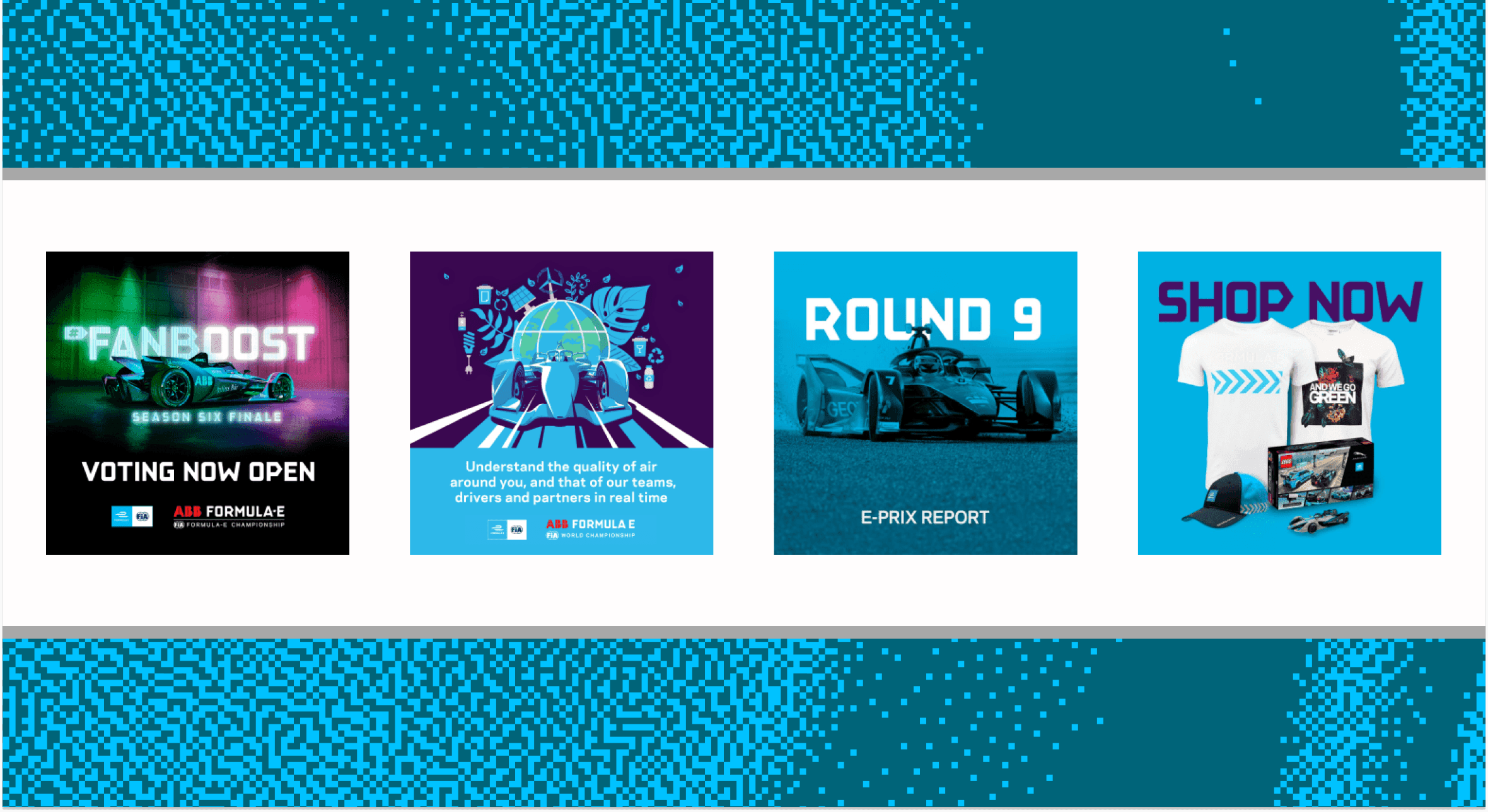
This allowed Formula E and its sponsors to clearly see how fans moved from attention to action, turning live race-day engagement into a measurable, outcome-driven performance layer rather than a one-off moment.
Each race generated over 300 fan submissions, creating a consistent volume of consented, fan-generated content that could be reused across marketing and partner channels.
A 107% interaction rate demonstrated that fans were not just viewing content, but actively participating, driven by Submission and Click-Through Tiles embedded directly within the experience.
Instead of guessing what worked, Formula E gained clarity on which moments, formats and interactions drove meaningful action, and provided sponsors with proof of value grounded in real behaviour – not vanity metrics.
Emily Hirth, from Formula E said the following:
"It was a pleasure working with Amondo. It was great to integrate our fans into the Formula E experience while racing was behind closed doors. Using Amondo has helped increase traffic to the website and various other digital products with its simple user journey."
What other sports organisations can learn from Formula E
Formula E's approach highlights a broader shift facing sports, entertainment and live event brands.
Live moments are not just opportunities for attention; they are high-intent environments where real fan behaviour can be captured and understood.
Some key takeaways for other sports organisations:
Live events create a unique opportunity to capture first-party fan behaviour at the point of peak attention
By activating content during live experiences, brands can move beyond vanity metrics and gain behavioural insight into how fans actually interact, what drives action and which moments deliver value
Capturing first-party data and consent in-moment gives rightsholders and sponsors visibility that social and traditional event metrics can't provide
When behaviour is captured and connected to outcomes, live engagement becomes measurable, repeatable and commercially accountable
Crucially, this approach allows brands to extend value beyond the event itself, turning race-day attention into ongoing fan relationships, personalisation and long-term growth
Summary
By treating live events as an intelligence moment rather than a one-off activation, sports brands unlock a new source of first-party behavioural data.
This allows both the rightsholder and its sponsors to move beyond vanity metrics and gain clear visibility into how fans interact with content, what motivated action, and which moments drive meaningful outcomes.
Captured behaviour and consent allow for extended fan relationships beyond race day, turning live engagement into ongoing digital connection, personalisation and long-term value for fans and partners alike.